Three-Way Simultaneous Dialogue: Why Not Being Heard Creates Drama's Deepest Moment

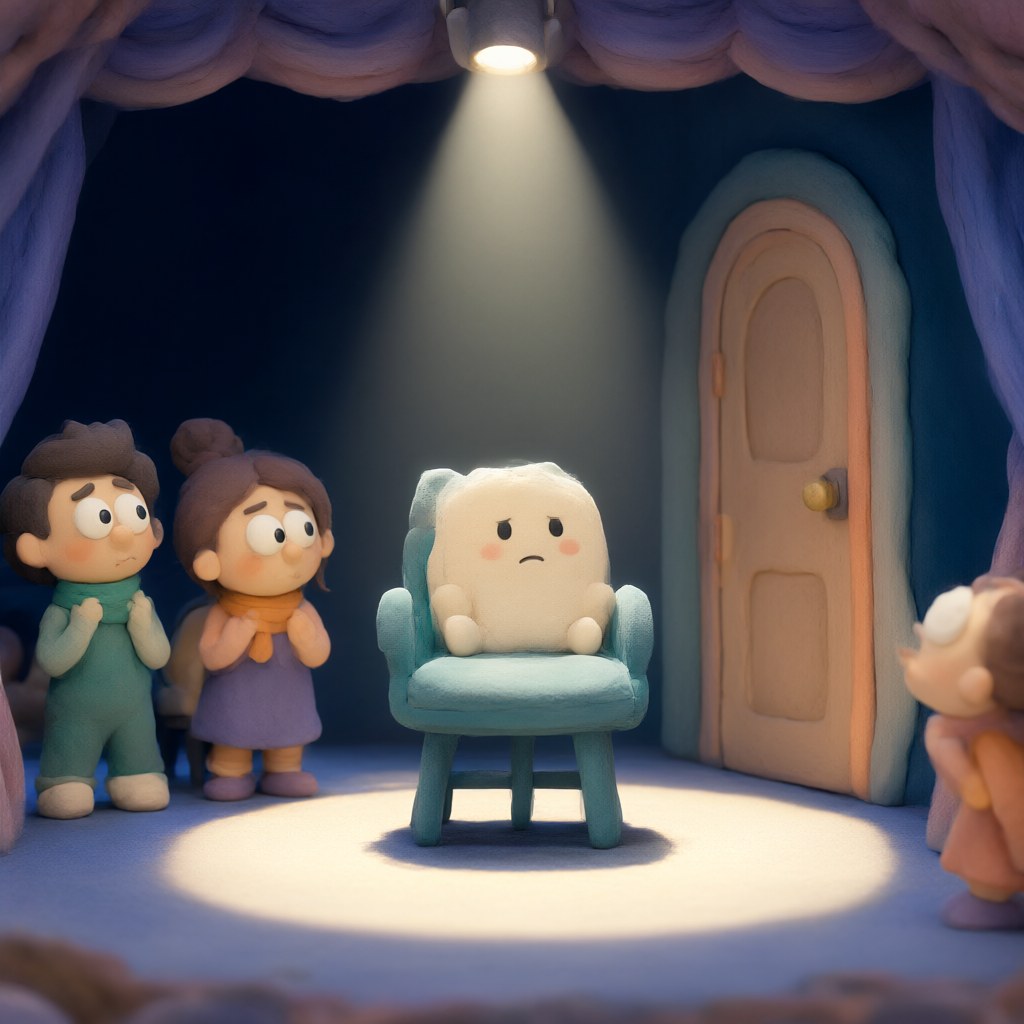
That is, three people are in a room. All three are talking, none of them waits for another to finish a sentence, and none of them hears a reply. If we saw this same scene in everyday life, we might call it rudeness or a successful family dinner that has turned into a fight. But when the same situation is rewritten on the page as a play, it can become the most precise image of modern loneliness: a person sitting among others and, at the same time, talking to themselves.
This article turns to one of the most technical and, at the same time, most emotional tools of contemporary playwriting: a scene in which three characters speak at the same time and are not heard. Not to crowd the stage, but to say something that orderly, turn-taking dialogue never can.
What Exactly Is Simultaneous Speech?
In classical dialogue, two or three characters take turns; one person's sentence prompts the next, and the scene moves forward like a ping-pong match. In simultaneous speech, this rule is broken. But breaking the rule is different from chaos. The professional playwright designs simultaneity: they know exactly which word falls on top of another, where the audience must pull one sentence out of the hubbub, and where all three voices must be lost at a single point.
Three common forms of this technique can be distinguished: short overlap (one character's sentence begins before another's ends), parallel speech (each person talks about their own world, and no one connects to anyone else), and the deaf trio (three characters in one room, but all three in their own communicative vacuum). It is the third form that creates the deepest dramatic moments, because in it loneliness is shown not in physical solitude but in the midst of a crowd.
Chekhov: Three Sisters, Three Different Clocks
Anton Chekhov should be regarded as the serious originator of this path. In Three Sisters, it rarely happens that three characters take part in a complete and logical conversation. They usually speak of their own desires: one of Moscow, one of work, one of an impossible love. The repetition of "To Moscow" in several characters' mouths becomes a kind of deaf chorus; everyone says the same sentence, and no one is after a single shared meaning.
The important technical point is that Chekhov has rid his scenes of the "bad guy." When no character is responsible for the misery, the conflict moves from the level of relationships to the level of the structure of language: people fail to reach one another because each is living in their own time. Three characters speak at once, but in fact three parallel plays are being performed in one room.
In Persian drama, too, Akbar Radi has worked with the same principle; in "Night on the Wet Cobblestones" and many of his works, characters respond to themselves more than they listen to one another. The hubbub of conversation in Radi is not accidental; it is the music of class difference and the inability to understand one another.
Pinter, Churchill, Kane: From Pause to Ownerless Voice
If Chekhov placed simultaneity in the natural context of a Russian family, Harold Pinter turned it into an instrument of power. In The Homecoming, there are scenes in which three men of one family speak simultaneously and over one another, and these interruptions give away the hierarchy. In his stage directions, Pinter distinguishes three kinds of silence: the short silence, the pause, and complete silence. This distinction shows that simultaneity is not disorder; it is a rhythm the writer plays.
In the restaurant dinner scene of Top Girls, Caryl Churchill marks the overlap of speech with slanted commas or slashes in the text so that the director knows which lines should fall on top of one another. This simple convention makes structure out of natural hubbub. And Sarah Kane in 4.48 Psychosis goes one step further: the voices do not even have a definite owner, so that the external trio becomes an internal trio.
Why Is This Scene Deeper Than Any Monologue?
- Loneliness in the presence of another: When no one answers, the audience is forced to feel loneliness not as a condition but as a lived experience.
- The economy of the right to speak: in simultaneity, it becomes clear who is allowed to interrupt someone else’s line and who is always cut off mid-sentence; this is itself a diagram of power.
- Delegating meaning to the audience: when three lines overlap, the audience is forced to choose which one to hear; and that very choice turns them from observer into participant.
- The layering of time: each character lives in their own time; the simultaneity of three voices is the simultaneity of three different pasts and three different futures.
In these scenes, no one lies and no one is bad; it is simply that no one listens. And this is what pulls tragedy out of the trap of morality.
The Fine Line Between Depth and Clutter
Most unsuccessful three-person scenes mistake simultaneity for loudness. The difference can be summarized in the table below.
| Criterion | Constructive simultaneity | Destructive simultaneity |
|---|---|---|
| Characters’ wants | Three distinct and conflicting wants | Three aimless voices |
| Information | The audience hears at least one key line | No line is heard in full |
| Rhythm | Overlaps are short and calculated | Everyone talks over everyone else constantly |
| Silence | Silence is the scene’s closing punch | There is no silence |
How to Write This Scene
- Before writing dialogue, write one wish line for each character that is never spoken in the scene; that line runs beneath everything that is said.
- Choose a shared word that all three characters use separately and with a different meaning; that word is the point where the voices collide.
- In the heart of the clamor, place only one complete, audible line. The audience will take it as the scene’s anchor.
- Design silence like a fourth character: at some point, cut off all the talk so the weight of not listening becomes clear.
- Read the scene aloud and perform it in three different voices; wherever meaning gets lost is usually exactly where you need to shorten it.
In the end, the conclusion is simple: the simultaneous three-person scene is the laboratory of modern playwriting. It is where the writer breaks out of the trap of well-made, polite dialogue and allows the audience to hear something the characters never hear. If simultaneity is written with motive and rhythm, it will not be clutter but the most precise form of dialogue: a dialogue in which the silence of a response is the loudest sound.