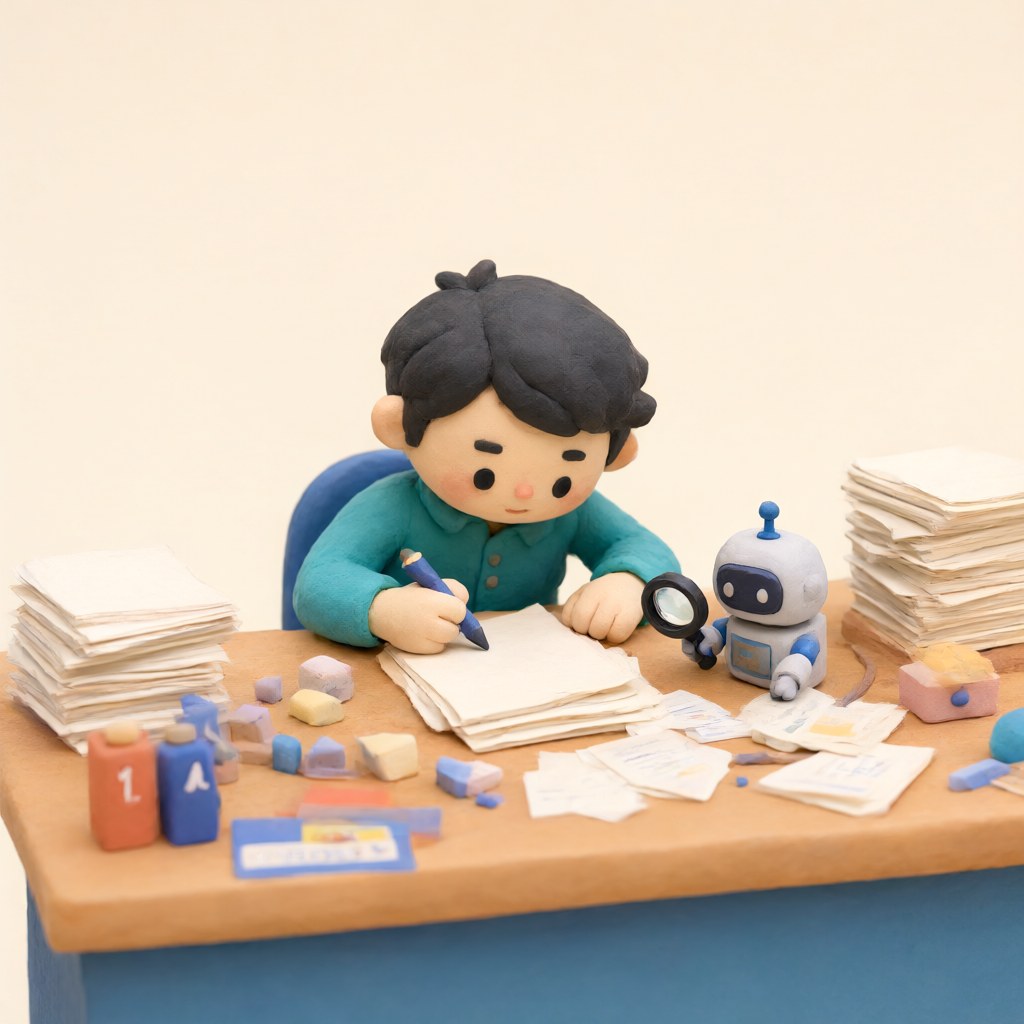
Writing for Children: The Smallest Reader, the Strictest Rules

Truth be told, writing for children is like working with an editor who is always present and never minces words: if a single sentence stumbles in a read-aloud or an unnecessary description gets in the way, they immediately lose patience and close the book. Yet this small reader is not the cruelest critic; they are the most honest one. They have no literary background, cannot tolerate abstract ambiguity, and if the story does not work, instead of critiquing it, they move on to something else.
For this reason, “children’s fiction” is not a simple genre but one of the most precise forms of narrative: the less experienced the audience, the more rigorously the rules of narrative must be observed.
Simplicity Is the Result of Subtraction, Not a Sign of Thinness
In fiction-writing workshops, the first piece of advice is usually: “Write simply for children.” It is correct advice, but only half of it. Simplicity in children’s literature is the product of intelligent omission: cutting redundant descriptions, cutting unnecessary characters, and cutting emotional explanation that should emerge from action. What remains must carry more weight: every sentence should create an image, every scene should move forward, every dialogue should change something.
Compare Roald Dahl’s Matilda with an ordinary school story. Dahl has neither complex vocabulary nor long sentences; yet in every chapter he creates a fresh conflict and a clear moral decision. Simplicity of language never makes up for structural laziness.
The Read-Aloud Test: Sentence, Rhythm, and Word
The most reliable editing tool for children’s fiction is reading aloud. If an adult trips over a word, the child is lost right there. Three things are exposed in this test:
- Sentence length: Short sentences one after another create an exhausting rhythm. A long sentence among several short ones gives the scene breathing room and momentum.
- Heavy words in the wrong place: A difficult word at a point of peak excitement throws the reader out of the story; but the same word in a situation where it can be guessed from context expands the child’s vocabulary without stopping the flow. Astrid Lindgren does exactly this in Pippi Longstocking: unexpected words sit inside funny scenes, and the child picks up their meaning from context.
- Sound patterns: phonetic repetition and hidden meter activate the child’s auditory memory. Mehdi Azar Yazdi’s “Good Stories for Good Children” is an example of prose that reveals its rhythm when read aloud.
Structure Has Its Own Rules for Every Age Group
A common mistake among beginners is writing a story for “children” without specifying an age. Reading ability, patience for sitting still, and understanding of time change dramatically between the ages of three and twelve. The following table clarifies these differences:
| Age group | Length and structure | Type of problem | Example |
|---|---|---|---|
| 3 to 5 years (picture book) | Under 500 words, circular structure, predictable repetition | Immediate, concrete problem: getting lost, sleep, fear of the dark | Where the Wild Things Are by Maurice Sendak; The Very Hungry Caterpillar by Eric Carle |
| 6 to 8 years | 1,500 to 5,000 words, short chapters, a single narrative line | School, friendship, family, sibling rivalry | The Stories of Majid by Houshang Moradi Kermani; Pippi Longstocking |
| 9 to 12 years | 10,000 to 30,000 words, full chapters, the possibility of multiple narrative lines | Identity, justice, loss, moral choice | Matilda by Roald Dahl; the Tom Gates series by Liz Pichon |
This table is not a law but a compass. Its most important column is the third: if the type of problem does not match the age, neither length nor language will save it.
The Child Character: Neither Angel Nor Victim
A child protagonist must have a clear desire and a real flaw. Max in Where the Wild Things Are first starts a fight, then becomes king of the monsters, and in the end, without anyone delivering him a moral lecture, returns to a warm dinner. This three-step structure—defiance, power, return—simultaneously answers, without a single word of preaching, the child’s need for independence and their need for safety.
The second rule that is frequently broken: the adult must not be the savior. If the teacher or the parent unties the knot, the child walks out of the story. In “Majid’s Stories,” the grown-ups are present and kind, but the decision and its consequences are almost always Majid’s alone.
How Far Can Fear, Loss, and Difficult Subjects Go?
Eliminating fear entirely robs a children’s story of its power. The Brothers Grimm fairy tales were full of violence in their earliest versions and were softened in later editions; the history of these very texts shows that the boundary lies not in the presence of fear, but in how it is processed. A child will accept fear, provided they are certain the story will not abandon them.
A practical rule: the crisis can be great, but the solution must fall within that child’s capacity. Death, illness, and separation can be introduced; only the ending must not be relentless and hopeless.
Pre-Submission Editing Checklist
- Read the text aloud and mark every sentence that limps.
- Check that the opening paragraph contains a clear hook: a strange voice, an unanswered question, or an unexpected action.
- Keep verb tenses consistent; irregular shifts between past and present confuse the inexperienced reader.
- See whether it is the adult or the child who unties the knot. If you reduce the adult’s role, the story usually grows stronger.
- Temporarily cut every description and see whether anything still happens; if not, keep the cut.
- Weigh the ending: has something been left to the child, or has everything been explained to them?
The Illustration Is the Other Half of the Text
In a picture book, text and image complement each other rather than repeat each other. If the text says “she was terribly frightened” and the illustration likewise shows only a frightened face, half the book’s potential has been wasted; the image can show precisely what the character is hiding. Sendak does exactly this in “Where the Wild Things Are”: the words calm and spare, the pictures large and untethered.
Conclusion
The rules of children’s storytelling are not needless strictness; they are tools that let a text work both in the spoken voice of a parent or teacher and in the ear of a child turning the pages alone. The more precisely these rules are observed, the more the simplicity of the result stands out — and that very simplicity is the hardest part of the work.
If you are writing a story for children, you can place your draft in Nevispar (nevispar.ir) and assess its structure, tone, and narrative coherence. More analyses of genres and writing techniques are published in the Nevispar blog.