The Future of Academic Writing: Where Papers and Theses Are Heading

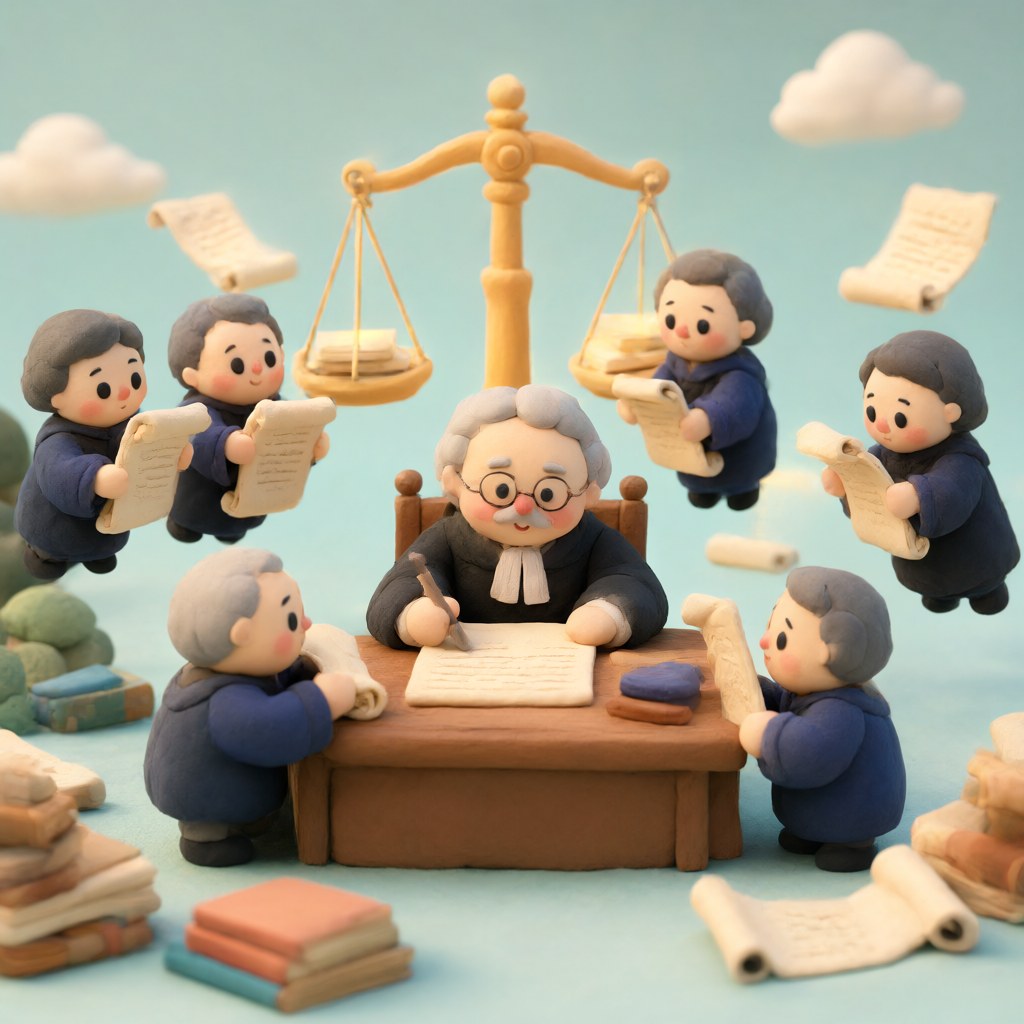
The useful question is not whether AI use will be banned. That question needs a yes or no answer that nobody can give with confidence today. The more useful question is this: if these tools stay — and the signs suggest they will — what becomes more valuable from here?
What follows is not a prediction. It is an analysis of what we actually know today and what can reasonably be inferred from it. Wherever we talk about the future, we talk in terms of what is likely or what seems plausible, not in certainties. What is documented today is stated separately, and we do not step past that line.
A likely shift from detection to disclosure
Policy in recent years circled one question: how do we tell that a tool wrote this text? It has become clear that this question has no dependable answer. AI text detectors are error-prone, and the documented example is that the maker of one of the best known of these tools retired its own text classifier, announcing low accuracy. The practical consequence of that fallibility is the false positive: perfectly human writing can be flagged as AI.
The Ministry of Science has issued a guide on using AI tools in research, and according to media reports, the output of AI text detectors alone cannot be the definitive basis for proving a violation. If the foundation of judgement rests on a tool that cannot say with confidence who wrote something, it is reasonable for policy to lean on disclosure and author responsibility instead of hunting tools.
It should be said plainly that no clear rule covers this today: the Law on Preventing and Combating Fraud in the Preparation of Scientific Works and its implementing regulation contain no clause about AI-generated text. Decisions therefore fall to university regulations, to arbitration practice, and to disclosure and citation. If you want to run this argument against your own practical cases, using AI in a thesis: is it plagiarism or not? separates three distinct scenarios.
Internationally, publisher practice is clearer: using an AI tool must be disclosed at submission, the tool cannot be an author of the paper, and full responsibility for accuracy and for avoiding plagiarism rests on the human author. Given those signals, it seems plausible that universities move toward disclosure as well — though that is analysis, not news.
Three scenarios
Three paths can be imagined from here. None of them is certain, and they do not necessarily exclude each other. What matters is the reasoning behind each one being more or less likely, not a guess about which will win.
An outright ban
An outright ban seems the hardest path to enforce. The tools are available, error-prone detection cannot police a ban, and systems that rely on prohibition alone tend to produce concealment rather than abstention. Beyond that, ordinary services such as typing, translation, editing and help with data collection sit outside the scope of the law's offence; a boundary that bans everything at once leaves those permitted tasks in limbo too.
Mandatory disclosure
Mandatory disclosure seems the most likely scenario. It aligns with international publisher practice, it does not need a precise detection tool, and in the absence of an explicit legal rule it is the lowest-risk route for universities. Its simple form is not complicated: a clear statement in the preface or an appendix saying which step the tool was used at and what the author's own contribution was.
Tools integrated into university systems
The third scenario is universities embedding the tools inside their own systems. Here it is worth being precise about what is already clear: the IranDoc similarity system shows textual similarity between your text and theses, dissertations, papers and the web, and it does not say who wrote the text. Registration in IranDoc and a similarity check before the defence are a required procedure in graduate study, but that system is not an authorship detector.
All three scenarios share one feature: none of them can replace human judgement. A ban relies on a human examiner to spot the violation, disclosure relies on that examiner to weigh the author's contribution, and an integrated system at best prepares textual evidence for the same examiner.
What does not change
Whichever policy is chosen, some things hold their place. The most important is the value of the research question itself: a tool can produce fluent text, but it does not know which question is worth answering. Real data works the same way. Data that was collected, measured and documented is not something that comes out of a text generator.
Human judgement and author responsibility hold even firmer. Even in international publisher practice, full responsibility for the accuracy of the text and for avoiding plagiarism rests on the human author. AI may change the form of disclosure and the tools of review, but it cannot take the place of the person whose name goes on the work at the end.
Skills that become more valuable
If disclosure becomes the centre of gravity, the most valuable skill is knowing what the right question is and how to turn it into a research plan. Framing the question and designing the method are the two steps no tool can take over, because the first depends on judging significance and the second on knowing the real constraints of the field. The general picture of that path is in writing a scientific paper and the IMRAD structure.
Second comes the critical review of tool output. A tool delivers fluent text that can be highly plausible and unsupported at the same time; the ability to separate a well-formed sentence from a correct one gets more expensive every year. Analytical writing and deep editing belong to the same family: rewriting language is only worth something when there is thought behind it.
The role of Persian and of local tools
Persian-language sources show a clear gap compared with English, and that gap seems likely to close more slowly. Some of the errors that appear in Persian texts come from exactly this: when a tool cannot find enough Persian sources, the risk of fabricated references rises. That problem is not solved by trusting the tool more; it is solved by citing by hand from texts you have read yourself.
With Persian-language tools, two very different jobs should not be confused: measuring textual similarity against other texts, and supporting writing and structure. The similarity system belongs to the first category and says nothing about whether a human or a tool wrote a text. It seems plausible that local tools move further into the second category, though none of them takes the place of human judgement.
Advice for a student starting today
A few rules last, regardless of which way policy goes. First, keep the trail: drafts, notes, dates and the route you took to your conclusions. That trail is both evidence of your own contribution and a help at the defence. Second, state the role of the tool honestly where it matters; in most scenarios disclosure costs less than concealment.
Third, invest in skills that do not lose value when the tool changes. Learn to critique tool output rather than admire its fluency. To see the practical boundaries, legitimate uses of AI in academic writing lists the low-risk tasks, and the Nevispar AI review panel is an example of structural review before you reach your supervisor. Neither replaces your supervisor or a human reviewer.
Conclusion
The future of academic writing is less about prohibition than about where responsibility sits: from the question of who wrote this text to the question of who stands behind it. Tools do not stand behind anything. Authors do.
That change seems likely to arrive slowly and unevenly, because there is no explicit rule for AI and every university and every reviewer can take its own path. In that situation, simple transparency — stating the role of the tool and keeping the trail of your work — is the cheapest insurance available.