The Aesthetics of Silence in Japanese Literature: Sentences Completed by What Is Left Unsaid

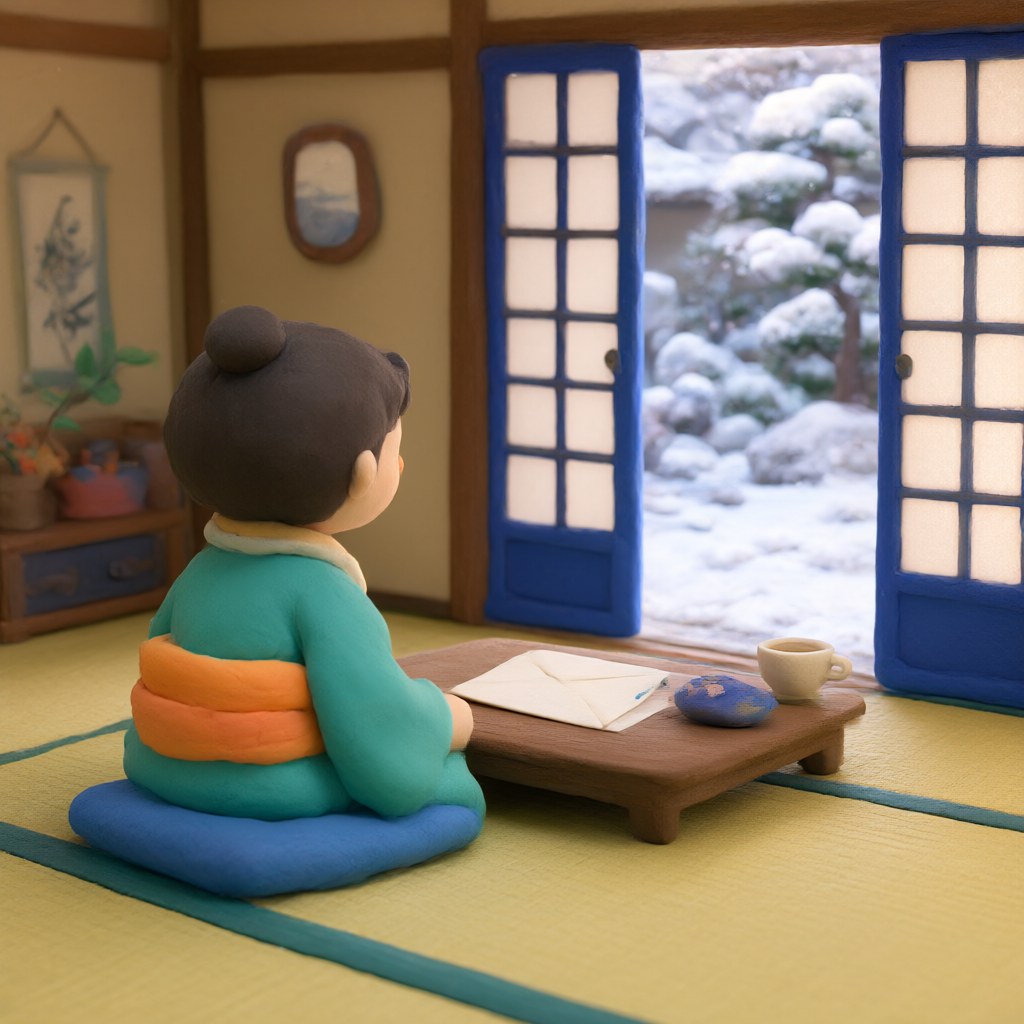
At the end of one of the most famous Japanese novels of the twentieth century, a man stands beneath a starry sky, and the galaxy pours into him in a silent onslaught. The author does not say that he is happy, nor that he is sad, nor even exactly what he saw. The sentence ends, and so does the novel. Yasunari Kawabata does the same at the end of Snow Country: he creates an image that bears the burden of all unspoken feelings, and then lays down his pen.
This essay is about that same choice: why, in the Japanese literary tradition, not saying something is a narrative device and not a flaw. The difference between this view and Western minimalism lies precisely here: omission in that tradition is usually meant to strike and surprise, whereas here it is meant to open up space.
“Ma”: Silence as a Structural Unit
In Japanese architecture and painting, there is a concept called ma (間): the interval between two things; an empty space that is itself part of the work. In the rock garden of Ryōan-ji, fifteen stones are scattered in raked sand, and what makes the garden is the relation of the stones to the space between them. Removing one of these intervals ruins not only the beauty but also the meaning.
In literature, this same logic leads to yūgen (幽玄): a beauty understood through suggestion and lost through explanation. In his 1968 Nobel lecture, “Japan, the Beautiful, and Myself,” Kawabata defended this very tradition and called as his witness not a novelist but a poet. Haiku is the small, precise example of this mechanism:
The old pond;
a frog leaps
and the sound of water.
— Matsuo Bashō
Seventeen syllables, with no adjective for loneliness or joy. The old pond means silence before the event; the event is a small movement; and the ending is a sound that breaks the pond and restores the silence. The poet says none of this. The reader says it.
Kawabata: A Sentence Left Suspended in Mid-Motion
Kawabata pushes the scene to the threshold of an emotional explosion and then turns the camera back toward the landscape. In Snow Country, the relationship between Shimamura and Komako stretches across several chapters, but the thing that seals this relationship is never announced in a declarative sentence. From Thousand Cranes to The Sleeping Beauty, the pattern repeats: death, separation, and failure arrive through image, not through announcement.
The important technical point is that this silence is also a product of the shape of Japanese sentences. The verb comes at the end of the sentence, the subject is entirely omitted in many cases, and this causes the sentence to remain suspended, as if someone has left a remark unfinished. Kawabata turns this feature of the language into a literary decision.
Six Gaps the Japanese Writer Deliberately Does Not Fill
This silence, in practice, is a set of choices that can be listed. If we try to isolate this technique, something like this emerges:
- Omission of Subject and Pronoun: The sentence says “longed,” not “he longed for her.”
- Omission of Name: In Sōseki’s Kokoro, the one who carries the novel’s greatest moral burden remains nameless to the end: “Sensei.”
- Dialogue Without Tags: Replies come back to back; the reader hears the tone for themselves.
- Description of Nature Instead of Declaration of Feeling: Snow, a mirror, an insect on a pillow — none of these are “conventional” metaphors; instead, they become substitutes for the emotional sentence.
- Omission of Cause and Motive: A character does something and does not explain it; not to the reader, not to themselves.
- Ending at the Peak, Not After the Ebb: The novel is abandoned at its maximum point, not at a point of calm.
When God’s Silence Becomes the Subject of the Novel
In his novel Silence (1966), Shūsaku Endō moves from device to subject. A Portuguese priest comes to seventeenth-century Japan and waits for years for an answer from heaven that does not come. The entire novel is built around this silence, and in the end the answer does not become clear either; the narrative style is itself the book’s argument. This is where technique ceases to be a stylistic signature and becomes the form of the content.
Translating Silence: Choices That Are Never Cost-Free
This is the hardest part of the work for a literary translator. Persian, unlike Japanese, carries person and number in the verb ending; so the translator is forced to supply a subject or pronoun somewhere and, without intending to, closes off the ambiguity a little. The same thing happens again and again in punctuation, dialogue tags, and small explanations “for the flow of the text.”
| Layer of silence | Form in the source text | Trap in Persian translation | Possible choice |
|---|---|---|---|
| Word | Omission of subject and pronoun | Adding “he/she” or “I” to complete the sentence | Changing sentence structure or using the passive voice |
| Sentence | Unfinished sentence and ellipsis | Completing the sentence so it has an ending | Retaining the ellipsis; accepting the broken rhythm |
| Dialogue | Without “said” and without explaining tone | Adding a tag to clarify who is speaking | Separating via line breaks and shifts in rhythm |
| Scene | Sudden shift to scenery | Adding an interpretive sentence about the character’s state | Trusting the image and removing interpretation |
The rule of thumb is this: every sentence that makes things “clearer” should be viewed with fear. Too much clarification makes the translation more readable and the work shallower.
How to Apply This Tradition in Persian Writing
Obviously, the structure of the language cannot be copied; but narrative decisions can be adapted. Three simple exercises:
- In one of the sensitive scenes of your story, remove the last emotional sentence and replace it with a physical detail: a plate that trembles, a knot that comes undone.
- Write a page of dialogue in which no one says “he said angrily” or “she asked hesitantly.”
- Remove the reason for a character’s key decision from the text; see whether the text still stands or collapses.
Conclusion
Silence in Japanese literature is not a courtesy or a decorative aesthetic; it is a kind of division of labor between writer and reader. The writer delivers the image, the pulse, and the gap, and the reader completes the meaning. This is what keeps a novel like Snow Country controversial after several decades: each generation finishes the last sentence for itself. For today’s writer, the practical lesson is clear: before adding an explanatory sentence, ask whether it builds the silence or covers it up.