Narrative Silence in Japanese Literature: Kawabata, Tanizaki, and the Art of Not Saying

That is, the novel Snow Country begins with a train moving through the snow, but in the opening pages Kawabata does not describe the man’s face; he creates the image of a girl falling across the windowpane. The man looks and does not voice his feeling. This very delay, this speechless gaze, is the key to one of the most important features of Japanese literature: a silence designed as deliberately as dialogue.
“Narrative silence” does not mean that the text is empty; it means conscious omission. The author knows something, can say it, and does not say it—and the reader feels precisely the absence of that thing. In what follows, we see how this mechanism takes two completely different yet logically kindred forms in the work of two great twentieth-century writers, Yasunari Kawabata and Jun’ichirō Tanizaki.
Silence Is a Technical Decision, Not a Void
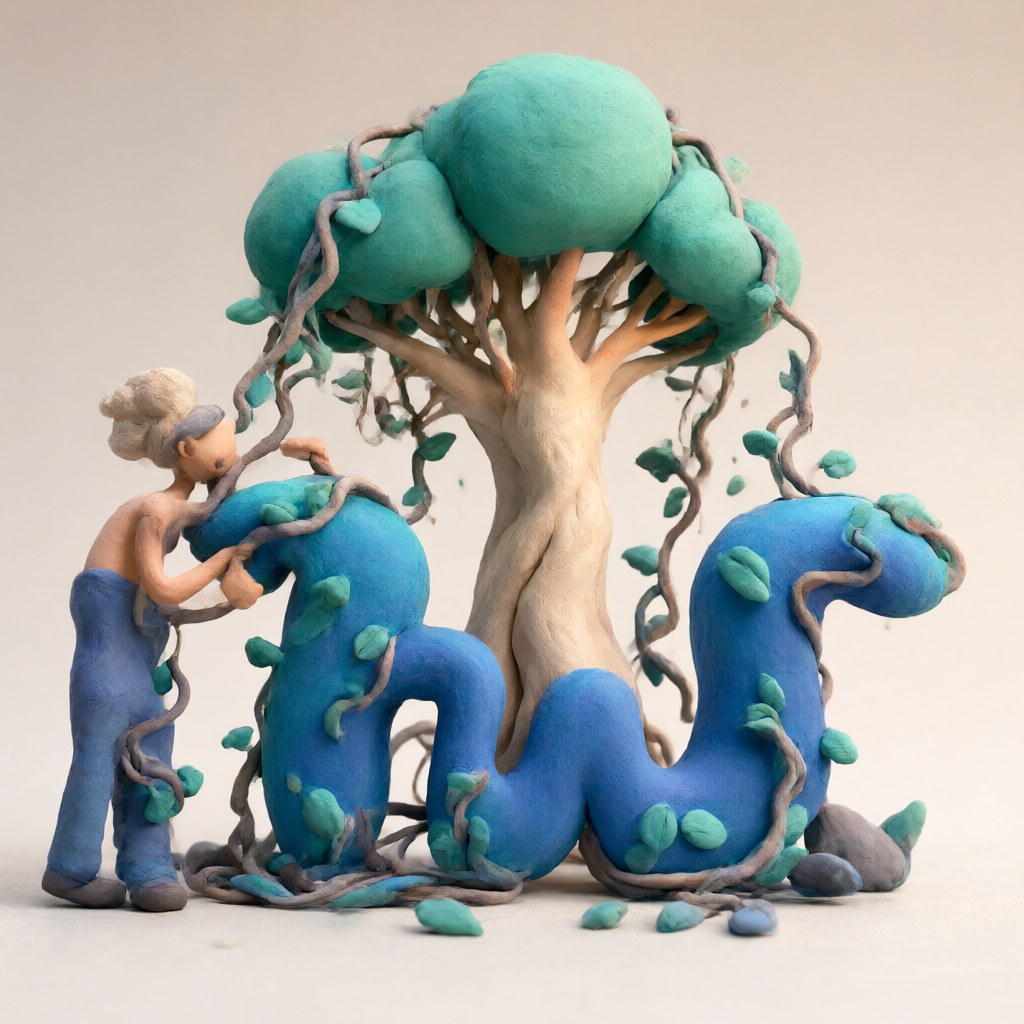
In Japanese literary criticism, there are two key terms for this phenomenon: ma (間), meaning the meaningful distance between two things, and yohaku (余白), meaning the whiteness left in the margins of a text or painting. Both proceed from the same premise: meaning is not in the signs themselves but in the relationship between them. Just as in a Zen garden, stones do not fill the space; they create it.
In his 1968 Nobel lecture, “Japan, the Beautiful, and Myself,” Kawabata explained this same idea through images such as the moon in water and a flower in a mirror: Japanese literature does not seek to reproduce reality; it shows its reflection. And a reflection always omits something; that omission is precisely what opens a place for the reader’s imagination.
Kawabata: Narrative at the Threshold of Speech
Snow Country was published in installments over fourteen years, from 1934 to 1948, and this mode of publication gave it a fragmented, jump-cut structure. Kawabata himself said that the novel’s final sentence—the scene in which the fire and the Milky Way merge—was written before the rest of the text and was in fact the starting point of the work. An ending that is at once a climax and a halt: there is no word of the characters’ fate, no moral judgment.
In The Sound of the Mountain (1954), an old man hears a sound that seems to come from the mountainside and takes it as a sign that his own death is approaching. Kawabata never says whether the sound is real or an illusion; the novel ends with that sound and is left there.
Palm-of-the-Hand Stories
Kawabata wrote more than one hundred and forty “palm-of-the-hand stories” (掌の小説); some are shorter than two pages, and in them a single image, gesture, or object takes the place of the whole story. These are the best laboratory for observing silence on a small scale: the omission of setup, the omission of psychological analysis, and complete trust in the scene.
Tanizaki: A Silence That Comes from Shadow
Silence in Tanizaki is of a different kind. Kawabata speaks of solitude and beauty; Tanizaki speaks of things that cannot be said in the presence of others. The essay In Praise of Shadows (1933) is the manifesto of this view:
Tanizaki argues that beauty in Japan is created not in full brightness but in half-shadow and in what is half-visible; lacquer, gold leaf, and shoji paper acquire meaning in low light, not under a bright lamp.
In The Makioka Sisters (1943–1948), almost the entire novel revolves around a single question: Will Yukiko marry? But the book ends neither with a wedding nor with an answer. The final scene arrives at an ordinary bodily worry and is cut off without preamble. Tanizaki builds the reader’s expectation of “resolution” and then withdraws it.
The Key (1956) is a more exact example: a husband and wife each write in their diaries and know that the other reads them. What is not said—desire, jealousy, an unspoken agreement—is precisely what drives the narrative forward. Here silence is neither poetic nor mysterious; it is a mechanism for displaying power within the family.
Two Kinds of Silence, One Logic
| Feature | Kawabata | Tanizaki |
|---|---|---|
| Source of silence | Within the character and nature | Family relations and taboo |
| Principal tool | Image, chapter, symbolic object | The internal document: diary and letter |
| Type of ending | Poetic suspension | The collapse of reader expectation |
| Dominant feeling | Regret and beauty | Dread and unwitting awareness |
The most important similarity is that in both cases silence is the result of omission, not forgetfulness. Both writers first write, then perform surgery.
How do we bring silence onto the page?
- Replace the feeling with an object. Instead of “he felt lonely,” put an object that only a lonely person would look at.
- Delete the last explanatory sentence. Usually, the sentence that translates the meaning of the scene for the reader is the one that should go.
- Interrupt the dialogue midway. Not with a dramatic ellipsis, but with an action: someone leaves the room, the kettle whistles.
- Close the scene before the outcome. Let the decision happen on the page after the scene ends and remain unseen.
- Shift the rhythm. Write slowly and expansively for details, and briefly and dryly for important events; silence is also created in pace.
- Run the deletion test. Read the text once without the explanatory sentences; if the meaning still stands, the deletion was right.
Silence is different from ambiguity
Silence has shape; ambiguity does not. In successful silence, the reader can say what has been omitted and where its empty space is. If they do not feel the omission, the text is merely ambiguous, and ambiguity creates nothing but fatigue. The difference between the two lies in the precision of what you have left behind.
Conclusion
Kawabata and Tanizaki arrived at the same conclusion by two different paths: narrative owes as much to what it does not say as to what it says. One drew this silence from nature and solitude, the other from shadow and the unspoken relations of family. For today’s writer, the practical lesson is clear: before asking “What should I add?”, one must ask “What can I remove while the text still stands?” — and then have the courage to remove it.