Writing a Book with AI: Book Map, Draft, Human Editing

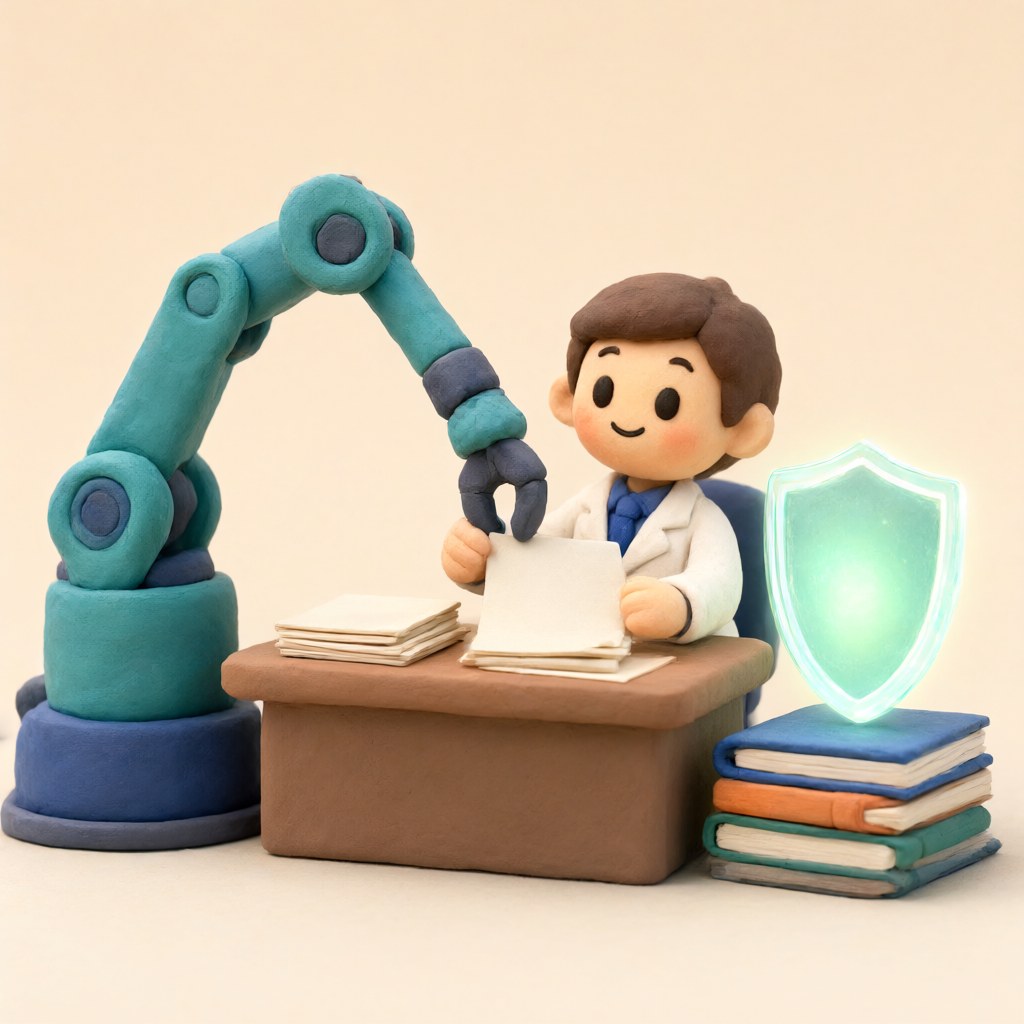
In other words, let's set aside the useless debate about "Will AI destroy writing?" The practical question is: Which parts of the work do we hand to the machine, and which do we keep?
The Division of Labor Matrix
| Stage | Suited to AI | Suited to Humans |
|---|---|---|
| Ideation and outline | Suggesting structure, chapter breakdown, variety of angles | Final choice of topic and tone |
| Text drafting | Structured chapter-by-chapter expansion | Sensitive moments, emotional scenes |
| Facts and data | Gathering and organizing | Fact-checking and citation |
| The voice of the text (sound/style) | Surface-level imitation | Final construction |
| Editing and refinement | Suggesting alternatives | Final decisions |
A Workflow That Works (6 Steps)
1) A real brief, not "a book about…"
Before any generation, specify: audience, tone, depth, chapter length, and document type (novel, academic paper, instructional book). These few lines alone will double your output quality.
2) Take the book outline seriously
Chapters, subsections, and the purpose of each subsection. Without an outline, the model drifts from the main goal; with an outline, the text has direction. In the Nevispar system, this outline is displayed as an editable, reviewable form before generation — exactly where you should make your corrections.
3) Embed the brief in the model's memory
Characters, their traits, setting and time period, and those "base truths" that must not change throughout the book. If you've established these before starting, chapter nine will still recognize the same protagonist from chapter one.
4) Generate subsection by subsection, not the whole chapter at once
Smaller pieces give you better quality and control, allow you to pause and resume, and reduce the risk of repetition.
5) Monitor for repetition and contradiction
AI has two diseases: repeated phrasing and contradictory claims. The system should count repetitions and, after each chapter, check for potential contradictions. Look at honest metrics, not the illusion of quality.
6) Human editing — where the work becomes "yours"
- Rewrite the first and last page of each chapter yourself; your signature belongs there.
- Read the dialogue aloud; make the spoken tone human.
- Fact-check statistics, names, citations, and dates.
- Cut the filler (see the "Seven Viruses" guide).
Three Serious Warnings
- Fabricated facts: Models may invent sources or statistics. Every number must be independently verified.
- Tonal monotony: Unedited AI text becomes tedious by chapter five. Insert a deliberate "tone break" every few pages.
- Copyright and attribution: Don't copy model output verbatim from a source, and follow platform publishing rules for labeling AI-generated content.
A Sample Workday
- Morning: Review the outline and brief (30 minutes)
- Generate two subsections with a read-through of each (90 minutes)
- Human-edit the two subsections generated yesterday (60 minutes)
- Jot down story sparks for upcoming chapters (15 minutes)
AI provides speed; you create the voice. A book is the product of dividing the labor between the two.