Oblique Strategies and Random Stimulus: Breaking a Block With Something Unrelated

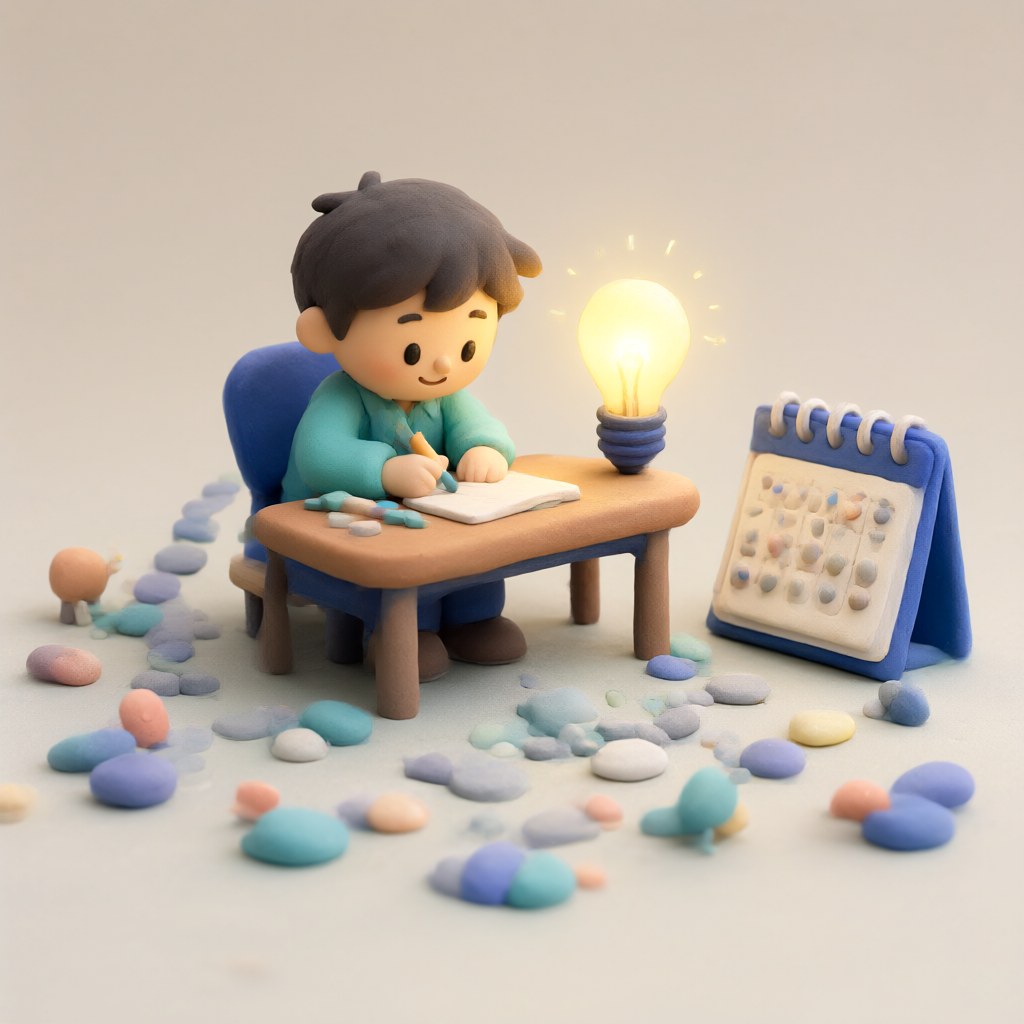
Picture a clinic blog that has spent three months on the same handful of topics: opening hours, insurance, health tips. Its writer is not lazy; every time he sits down the mind takes its usual route and the sentences are repetitive before they are written. "Think harder" does not fix this, because every thought starts from the same point.
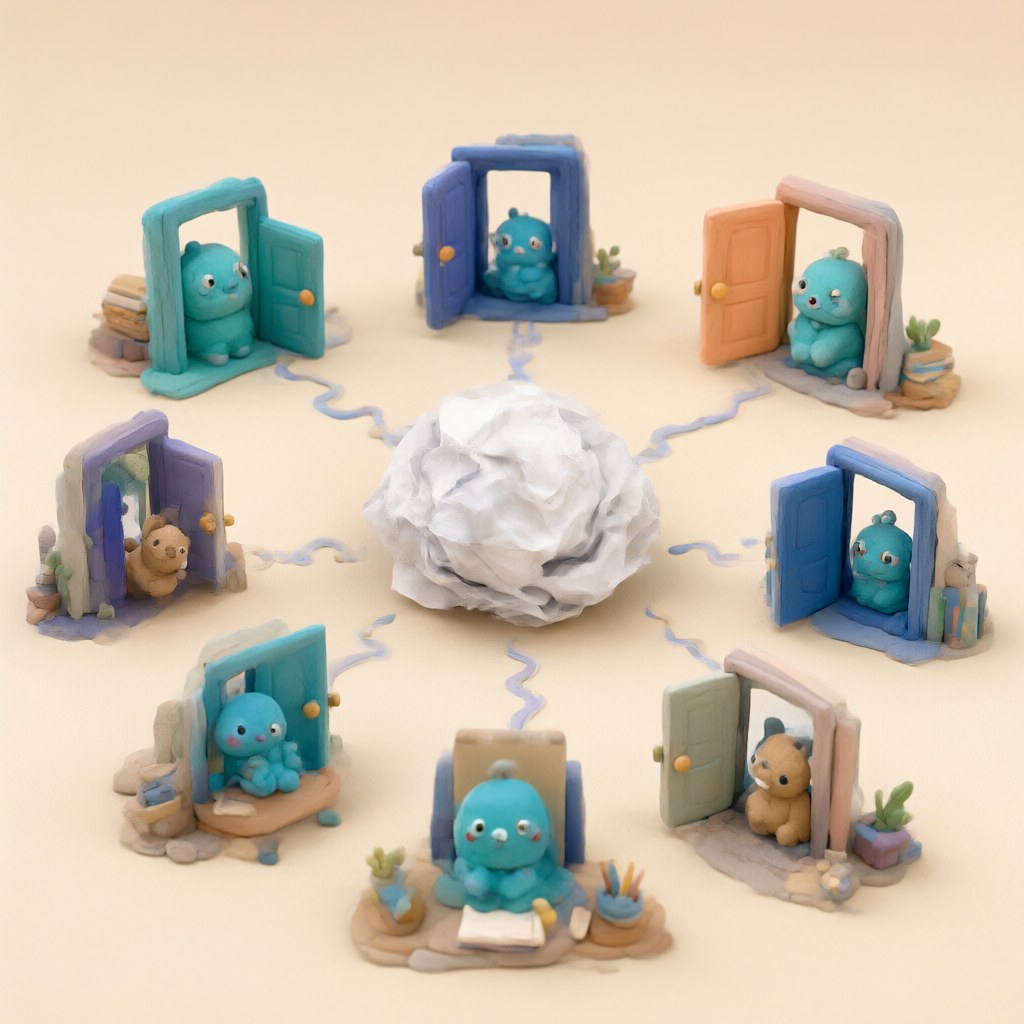
The way out is to drop in something entirely unrelated to the topic and then build a bridge between the two. That is a random stimulus, and its effect lies precisely in the forced bridging: a brain that must connect "insurance" to an unrelated word is pushed off its usual route.
Below: three established sources for this move — oblique strategy cards, de Bono's random entry and the cut-up — then three connection steps and a fifteen-minute exercise. One boundary: this is about randomness, not constraint; if too much choice is your problem, the map of unconventional writing methods puts both families side by side.
Oblique strategies: cards for when you are stuck
Brian Eno and Peter Schmidt first published the "Oblique Strategies" cards in 1975. The idea came out of studio work: when you are stuck in the room and every option has become a repeat of the last one, draw a short and slightly obscure instruction and see what it does. The instructions are deliberately general so that you have to build the meaning for the problem in front of you.
A few from the deck: "Honour thy error as a hidden intention," "Use an old idea," "Discard an axiom." None tells you what to write; all three force a decision you would not otherwise take. A tip tells you what to do; a card makes you say something.
You do not need a printed deck. A twenty-line list of short instructions on your phone is enough; what matters is that the draw is random and you may not swap it. Draw the first card, dislike it, take a second — and you are choosing, which means you get what was already in your head.
De Bono's random entry
Edward de Bono formulated the same move within lateral thinking and named it "random entry"; his broader account of how to direct attention is in Six Thinking Hats (1985). His version is simpler than a card deck: take a genuinely random word — from a dictionary, a news headline, the label on a can — and attach it to the problem.
Example for that clinic blog. Your topic is "why patients cancel their appointments" and your word is "umbrella." The forced connection opens routes: an umbrella means being ready for something that may not come, so a cancellation is not always indifference — sometimes the patient was unprepared. From that link a column emerges: what you should know before your appointment.
The subtle point is that the word must not come from your own field. Pick "treatment" for a health topic and you build no new connection at all. The value is in the distance; a nearby stimulus only repeats the previous thought with a new word attached.
Three steps to connect a stimulus to the text
Most of the damage happens in steps two and three, not in the draw:
- Record the stimulus without judging it. Write the word or the card exactly as it is, even if it looks silly. Decide nothing here about whether it is good; the thinking comes later.
- Build three forced connections. Attach the stimulus to the topic and write three sentences, each making one connection. A sentence may be absurd; the condition is that it makes a real connection rather than politely dismissing the stimulus.
- Pick one and expand it. Choose the connection closest to your actual work and write a full paragraph from it. Do not throw the other two away; keep them in your notes, because next month they may be useful.
Step two is where most people cheat: they fasten the stimulus to the topic with a general sentence and move on. For the clinic blog that is "An umbrella, like life, is unpredictable" — which does nothing. The working version: "A patient who cancels is like someone without an umbrella who has seen the rain; the cancellation is a last-minute decision, not indifference to treatment." That gap is the gap between practice and pretending.
A personal stimulus bank
If you have to invent a stimulus every time, you will end up reusing the same handful of words. The better route is a small bank filled while you are not stuck:
- Newspaper and magazine clippings. Headlines and half-sentences from an advertisement are good sources of unrelated stimuli. Five clippings a week in your bag is enough.
- A list of unrelated words. Thirty words from fields with no connection to your work: cooking, sailing, tailoring, architecture, gardening. One word from each.
- Overheard sentences. The funny thing someone said in a queue. Attached to a professional topic, those sentences produce a new tone.
- An image. An unrelated photo from your phone album. The strongest option for descriptive writing, because sensory detail comes with it.
Empty and refill the bank every few weeks. A stimulus used ten times is no longer random; it has become the usual route with a fresh surface.
The table makes the choice of source concrete:
| Stimulus type | Where from | Best for | What it gives the clinic blog |
|---|---|---|---|
| Unrelated word | A thirty-word list or a dictionary | Breaking a repetitive topic, finding a new angle | "Umbrella" connects to the cancellation topic |
| Instruction card | Oblique strategies or your own list | When a structural decision is stuck, not the topic | "Discard an axiom" breaks the column's usual shape |
| Newspaper clipping | Headlines and ads | Finding everyday language for a specialist topic | A headline from an insurance ad becomes a column's tone |
| Image | Your phone album | Descriptive writing and scene setting | An empty corridor photo opens a column about waiting |
| Cut text | A cut-up of your own draft | When a half-written piece has locked its structure | Two old paragraphs produce a new first sentence |
The cut-up: randomness applied to the text
The second family applies randomness to the text rather than the topic. Brion Gysin and William S. Burroughs used the cut-up in the late 1950s and the 1960s: cut the writing into pieces, rearrange the order, read the new version and look for combinations you had not seen.
The practical version needs no scissors: put the sentences of an old piece in a file, shuffle them, and read. You are cutting the familiar logical links, and when the mind cannot take the known route it invents a new relation.
A lower-risk application: interleave the sentences of two paragraphs from two old columns of that blog. Half the result is nonsense and you discard it, but the other half often holds a sentence ordinary thinking would never reach. The cut-up produces raw material; it does not write the final text.
The fifteen-minute exercise
Run this once on something you are genuinely stuck on, not on a practice topic:
- Minutes one to three. Write the topic in one sentence, then write under it: "what I do not want to say." That second sentence is usually the real stimulus.
- Minute four. Draw a stimulus: a card, a word from the bank, a clipped headline. Write it at the top of the page and do not change it.
- Minutes five to nine. Write three connections, each a complete sentence. Do not rush; if the second connection is hard, that is a sign the stimulus was distant enough.
- Minutes ten to fourteen. Choose one connection and write a full paragraph. Put nothing else from the original topic into it.
- Minute fifteen. Set aside one sentence from that paragraph as the first sentence of the real piece. If nothing was usable, draw the next stimulus and repeat tomorrow.
What separates this from freewriting is the forced stimulus: in freewriting the mind chooses the route, here something outside does. If you would rather choose the route yourself, freewriting and morning pages is the right tool.
The common mistake: randomness instead of thinking
The biggest error is treating the stimulus as a substitute for thinking. The sign is clear: the draft is full of odd allusions that lead nowhere, because the writer inserted the stimulus and skipped step two. A stimulus is only a starting point; what you do next is the work.
Second error: using the stimulus to escape the hard part. If you draw a card every time you reach the difficult section, you are postponing the difficult section. A simple test: after the exercise, did one sentence get added to the real draft, or did you just open a new page in your notebook?
When this method does not work
Know three situations. First, when your shortage is information rather than ideas: if you do not know what patients actually ask, no card replaces interviewing one. Second, when the draft has no clear structure: a stimulus on a shaky structure only multiplies confusion. Third, when the real problem is focus or time — three weeks without writing will not be fixed by another stimulus.
In those states, put the method down. If the sentences have gone generic, a self-imposed constraint cuts more precisely than a stimulus; examples are in writing under constraints. If your ideas are few in number rather than shallow, the question-driven SCAMPER for writers is the better option.
One final rule: keep the randomness controlled. One stimulus per session is enough; draw five cards and insert all five and the reader gets lost — which is not randomness's fault.
Once the stimulus has done its job and the first sentence exists, carrying it forward is ordinary disciplined writing; Nevispar fills exactly that gap — chapter-by-chapter structure with editing that stays in your hands.